

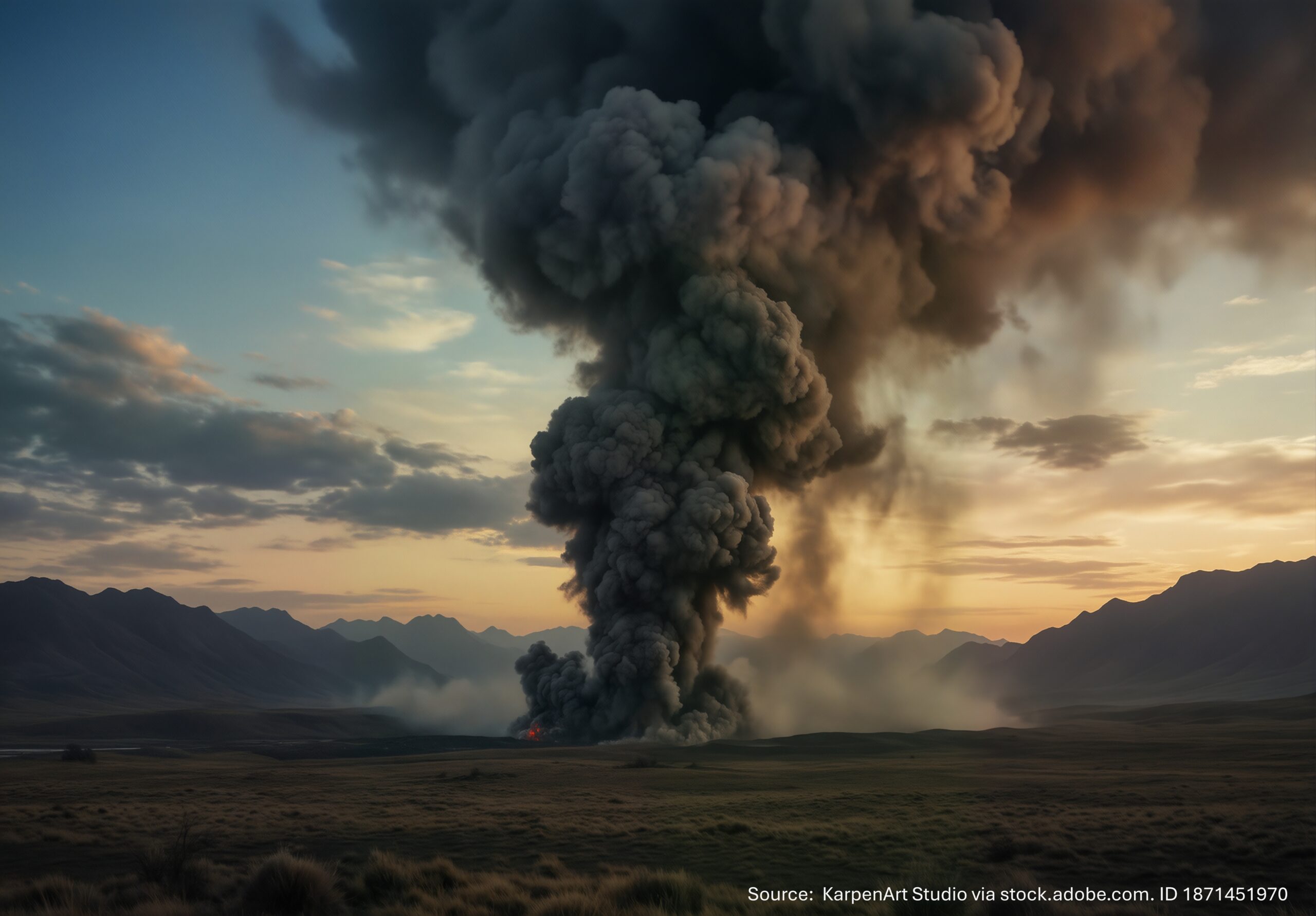
Wildfire season is now well underway in the forests and rangelands of the western United States. Smoke plume forecasting is an increasingly valuable tool for giving people and agencies a “heads up” about when and where unhealthy air is likely to occur, so that action can be taken before the smoke arrives.
Current Smoke Forecasting Challenges
Several smoke plume models are available to fire and air quality managers for forecasting smoke movements, including HRRR Smoke, HYSPLIT, CMAQ, and WRF SFIRE, to name a few. In Oregon, major wildfires can and do occur within about 50–100 kilometers of the dense, timbered forests of the Cascade Range, but all of these operational smoke models tend to struggle most at those distances, and published evaluations back that up.
Studies comparing multiple smoke forecast systems (including HRRR Smoke, HYSPLIT based systems, and others) report large errors in plume position and concentration in the near field, especially in the first 50–100 km where plume rise, small scale winds, and fire behavior are hardest to represent. A recent assessment of two operational smoke modelling systems found significant biases and missed features for smoldering or slow moving fires, with under prediction of peak PM₂.₅ and poor capture of sharp gradients near the source. Review and planning papers (e.g., the federally managed Fire and Smoke Model Evaluation Experiment) explicitly note that near source smoke structure and evolution are a key weakness in current models and a major target for new observations and model development.
Advancing the Next Generation of Smoke Forecasting
Air Sciences Inc. is currently undertaking research to develop a new smoke forecasting tool that better resolves the internal structure of near source smoke plumes and uses rigorous statistical methods to quantify and communicate confidence and accuracy in short range smoke forecasts. The model design is largely complete and is now awaiting a funding source to develop and implement this next generation smoke forecasting tool for air quality and fire managers.
Learn More
For more information about our wildfire smoke forecasting research or to discuss how Air Sciences can support your air quality and smoke management needs, please contact us with any questions or project inquiries.
